Salar de Uyuni from San Pedro de Atacama: Four Days Across the Border
4 min read
Plan four days and a passport, not a day trip. The Salar de Uyuni lies in Bolivia, and the tours from San Pedro cross the Chile–Bolivia border, spend three nights in Bolivia and come back to San Pedro on the last day. Every detail below comes from the tour pages.
Two ways to go
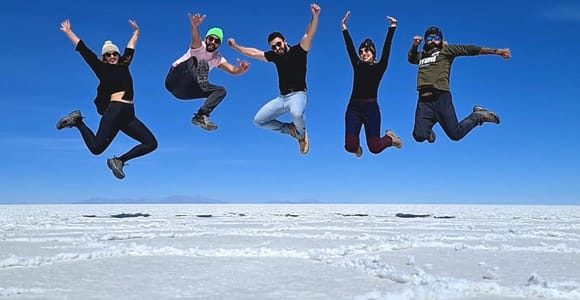
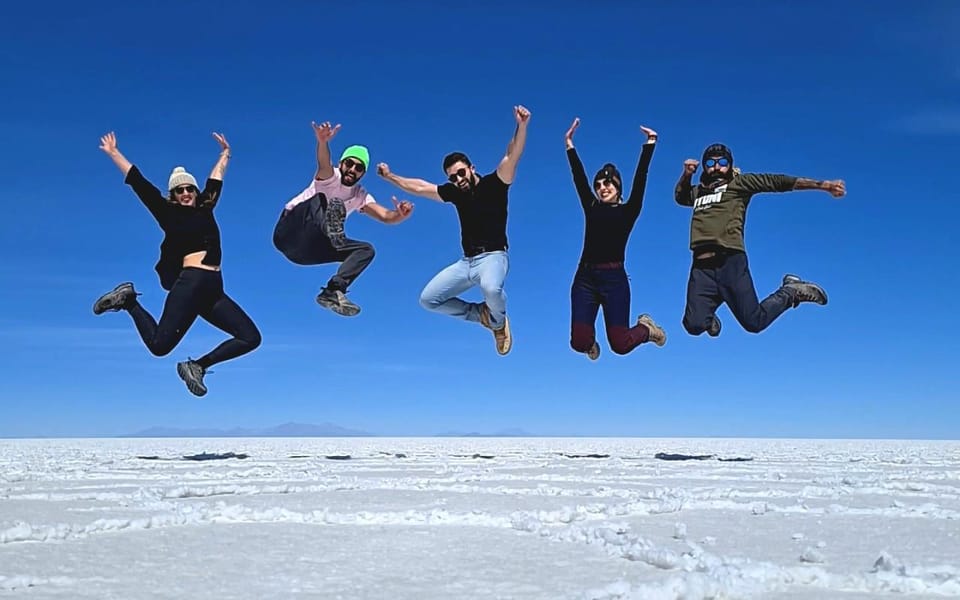
The 4-day Uyuni Salt Flats tour is a small group of up to 6 people. It leaves San Pedro early, climbs about 2,000 metres in 45 minutes and crosses the borders after breakfast. Day one covers Laguna Blanca and Laguna Verde, the Salvador Dalí Desert, a dip in the Polques hot springs, the Sol de Mañana geysers and Laguna Colorada, and ends with a night in the village of Quetena Chico. Day two passes the Stone Tree and Laguna Catal and ends at a salt hotel. Day three starts with sunrise on Incahuasi Island, then perspective photos on the salt flats, the Plaza de las Banderas, Ojos del Salar, Colchani and the train cemetery in Uyuni, and a second night in Quetena Chico. The last morning you drive back and are dropped at your hostel around midday. It costs €313.76 and has 90 reviews.
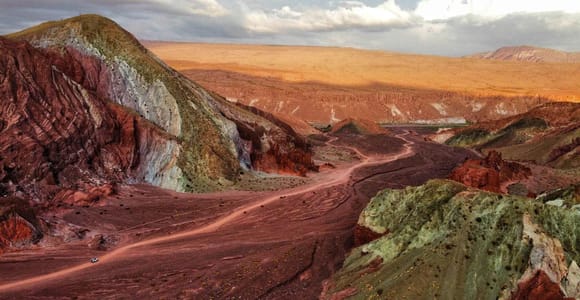
The private 4-day 4WD tour is your group only, up to 6 people, in a 4x4 for four days and three nights. It crosses at Hito Cajón, then runs through the Salvador Dalí Desert, the Siloli Desert with the Stone Tree, Laguna Colorada and the Sol de Mañana geothermal area before the salt flats, and returns through the border to San Pedro. Most of these sights are on the shared route too; the private tour adds the Hedionda and Cañapa lagoons and visits Incahuasi Island only when conditions permit. It costs €802.22.
Side by side
| Shared tour | Private tour | |
|---|---|---|
| Group | Up to 6 | Your group, up to 6 |
| Guide language | Spanish | Spanish, English |
| Nights | Two in Quetena Chico, one in a salt hotel | Three nights |
| Meals | Breakfast, lunch and dinner listed | Ask the operator |
| Park fees | Bolivian national park entrance listed under inclusions; the page also suggests carrying 300 bolivianos for entrances and purchases | Termas de Polques admission is not included |
| Not suitable for | Pregnant women, back problems, wheelchair users | Children under 4, altitude sickness, babies under 1 year, people over 95 |
Documents and what can change
The private tour’s page says the border crossing needs a valid passport or ID depending on your nationality, that you must check visa requirements and complete the digital form that the Bolivian authorities require, and that the itinerary can change because of weather, road conditions or border restrictions. The shared tour’s page tells you to make sure all identification documents are up to date and to carry a passport or ID, also for children. We found no official source on visa rules for your nationality in this research, so check them with the Bolivian authorities yourself.
Language is the real catch on the shared tour. The page lists a Spanish-speaking live guide only, and one traveller review says the drivers spoke only Spanish. If you do not speak Spanish, the private tour lists English as well. The shared page also asks you to bring toilet paper, about 5 litres of drinking water and thermal clothing.
Which to book
For most travellers who speak some Spanish, the shared tour is the simple option: it has the reviews and a small group. Choose the private tour if you need English or want a vehicle for your group only. Keep either one for later in your stay: the private page warns of high altitude and extreme temperatures and is not suitable for people with altitude sickness, and the shared tour includes an oxygen bottle. Compare all multi-day tours and read the sunrise geyser guide for the same advice on acclimatising.